


If you are researching dental implants in Colorado Springs, the first question is usually simple: what actually happens, and when? Knowing each step ahead of time takes much of the worry out of treatment.
At Powers Dental Group, our Colorado Springs office at 5780 N. Carefree Circle walks every patient through the process before it begins. Dr. Paul Smith leads implant care here, with special interests and training in dental implants, and Dr. Trent Glaser has completed continuing education in implant placement and restorations.
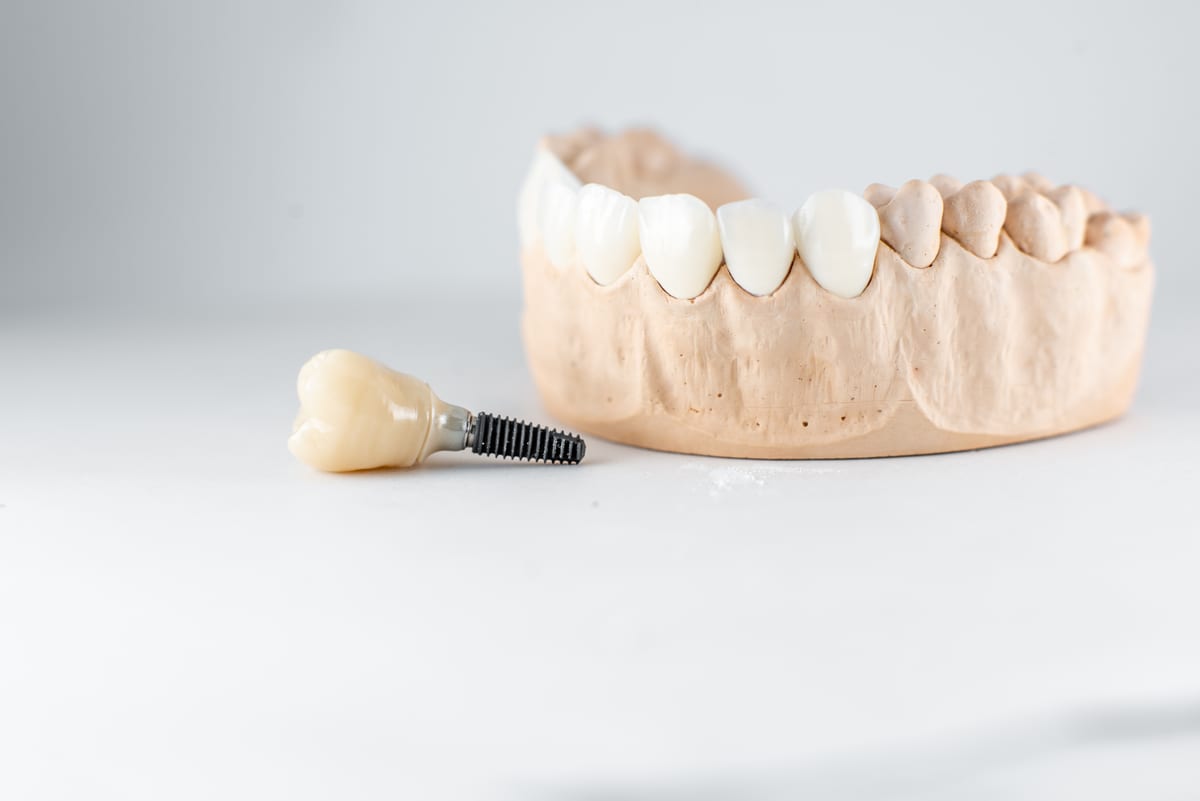
Dental implants are one of the most dependable ways to replace missing teeth. A titanium post acts as an artificial root, and a custom crown, bridge, or denture attaches to it, so the result looks, feels, and works like natural teeth. Whether you are replacing one tooth or several, treatment follows a clear, predictable path. This guide covers each step, from your first consultation to the day you leave with your finished smile.
Step One: Your Consultation and Treatment Planning
Your implant journey begins with a comprehensive consultation at our Colorado Springs office. Your dentist reviews your medical and dental history, examines your teeth and gums, and takes digital X-rays to evaluate your jawbone and the space where the implant will go. This information shapes every decision that follows.
During this visit, you will talk through which restoration suits you best: a single crown, a bridge, or an implant-supported denture. Your dentist will also point out anything that needs attention first, such as gum disease or bone loss. Healthy gums are essential for implant success, which is why gum disease treatment is sometimes the first step.
You leave with a clear timeline, a list of the appointments to expect, and an explanation of what each one is for. Our team can also go over costs and coverage before treatment begins, and you can read about insurance and financing options in advance.
Step Two: Preparing Your Mouth for the Implant
Some patients need preparation before we can place an implant. This may include a tooth extraction, gum disease treatment or a bone graft. Not everyone needs these steps. It depends on your individual oral health, and your dentist will only recommend what your case requires.
A bone graft is used when the jawbone is too thin or soft to hold an implant securely. This is common after long-term tooth loss or years of wearing dentures, because the bone shrinks without a tooth root to stimulate it. Grafting material is placed in the area and given time to fuse with your natural bone, which can take a few months. Extractions and similar procedures fall under our oral surgery services.
Once you have healed, your dentist confirms the site is ready before moving on. This groundwork is what sets restorative dentistry apart from a quick fix: the goal is a stable foundation, not just a filled gap.
Step Three: Implant Placement and Healing
Placement is the appointment most patients feel nervous about, and it is usually more manageable than expected. The procedure is done under local anesthesia, so you should not feel pain during it. If anxiety is a concern, ask about sedation dentistry options. Your dentist makes a small opening in the gum, places the titanium implant post into the jawbone, and closes the gum with sutures. How long the visit takes depends on how many implants you need, and your dentist will give you an estimate beforehand.
Mild soreness and swelling are normal for a few days afterward. Over-the-counter pain relievers and cold compresses usually keep discomfort under control, and most people are back to normal activity within a couple of days.
After placement, the implant enters a stage called osseointegration. Over several months, the titanium post fuses with your jawbone. This bond is what gives an implant its strength and stability, so following your aftercare instructions closely during this period matters.
What to expect while you heal:
- Mild swelling and bruising near the site for a few days
- A soft-food diet for the first week or two
- Gentle rinses with warm salt water to keep the area clean
- Follow-up visits so your dentist can monitor healing
- No tobacco, which can slow healing significantly
Step Four: The Abutment and Your New Crown
Once the implant has fused with the bone, your dentist attaches a small connector called an abutment. It sits on top of the implant and extends just above the gum line, and it serves as the anchor for your restoration. This visit is typically quick and straightforward.
Next, impressions of your mouth are taken so your restoration can be made to match the color, shape, and size of the teeth around it. For a single tooth, that is a custom dental crown. If you are replacing several teeth, the implants can support a bridge or denture instead.
When your restoration is ready, your dentist secures it to the abutment and checks your bite carefully. Small adjustments are made on the spot if needed. You leave with a fully functional, natural-looking replacement tooth, and a plan for follow-up visits to keep it healthy.
Meet Your Dental Implant Team in Colorado Springs
Who places and restores your implant matters as much as the implant itself. At our Colorado Springs office, two dentists have focused training in implant dentistry.
Dr. Paul Smith earned his Doctor of Dental Surgery degree from the University of Minnesota in 1995, graduating with high distinction. He has taken numerous post-graduate courses in dental implants and endodontics, and his special areas of interest and training are dental implants, root canal therapy, crowns, and bridges. Learn more about Dr. Smith.
Dr. Trent Glaser graduated from the University of Oklahoma College of Dentistry in 1999 and joined Powers Dental Group in 2015. He has completed continuing education in several areas of dentistry, most recently including implant placement and restorations. He is a member of the American Dental Association, the Colorado Dental Association, and the Colorado Springs Dental Society. Learn more about Dr. Glaser.
When you request an appointment, mention that you are interested in dental implants so we can plan your consultation accordingly.
The Benefits of Dental Implants in Colorado Springs
Implants replace both the root and the visible part of a tooth, which is why they offer advantages that bridges and dentures cannot fully match. Unlike a traditional bridge, an implant does not rely on neighboring teeth for support, so healthy teeth do not need to be altered.
Here is what patients in Colorado Springs gain from implants:
- Long-term durability: with good care, implants often last 20 years or more, although the crown may need replacing after several years of normal wear
- A natural look and feel: the crown is matched to the color and shape of your surrounding teeth
- Full chewing function: eat the foods you enjoy without worrying about a shifting denture
- Bone preservation: the implant stimulates the jawbone like a natural root, helping prevent the bone loss and sunken facial shape that can follow tooth loss
- Easy daily care: brush and floss as you would for natural teeth, with no adhesives or removal
- Clearer speech and more confidence when smiling, compared with missing teeth or loose dentures
The goal is not just to replace a tooth. It is to restore how you eat, speak, and smile, with a treatment plan built around your needs.
Frequently Asked Questions About Dental Implants in Colorado Springs
How long does the dental implant process take?
The full process typically takes between three and nine months, depending on your needs. Patients who need extractions or bone grafting will have a longer timeline. The healing period after placement is the most time-intensive part. Your dentist will give you a personalized estimate at your consultation.
Is getting a dental implant painful?
Most patients find it more comfortable than they expected. Local anesthesia is used during placement, so you should not feel pain in the moment, and sedation options are available if you feel anxious. Afterward, mild soreness is normal and usually responds well to over-the-counter pain relievers.
Am I a good candidate for dental implants?
Most healthy adults who are missing one or more teeth can be considered. Good candidates have healthy gums, enough jawbone to support an implant, and a commitment to daily oral hygiene. Conditions that affect healing, such as uncontrolled diabetes or smoking, are evaluated carefully, and active gum disease needs to be treated first. If bone loss has occurred, a bone graft may build the support you need.
Can I get implants if I have worn dentures for years?
Yes. Long-term denture wear does not automatically rule out implants, though it can cause jawbone loss that may call for a bone graft first. Once the bone is ready, implants can support a new bridge or an implant-retained denture that fits more securely than a traditional removable one.
How do I care for my dental implant?
Care for it much like a natural tooth. Brush twice a day, floss daily, and keep up with regular checkups and cleanings. The crown can still collect plaque, and the gum around it can still become inflamed, so good hygiene is essential for long-term success.
Does insurance cover dental implants?
Coverage varies by plan. Some plans cover part of the surgery or the crown, while others treat implants as elective. Our team can help you understand your benefits before treatment begins, and you can see which plans we work with on our insurance and financing page.
Schedule Your Dental Implant Consultation in Colorado Springs
If you are ready to take the next step toward a complete, confident smile, the team at Powers Dental Group is here to guide you. You deserve to understand exactly what lies ahead and to feel supported at every stage. Request an appointment online or call us at (719) 597-9737 to schedule your consultation.