
5780 N. Carefree Circle, Colorado Springs, CO 80917.
A Clear, Comfortable Path to a Straighter Smile
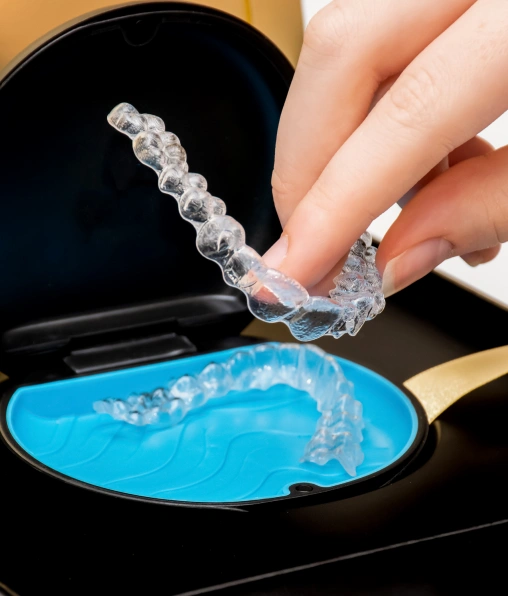
Invisalign® and Invisalign Teen® are orthodontic treatments that use a series of clear, removable aligners to straighten teeth. They are similar in design and function, but Invisalign Teen is specifically designed for teenagers. Both use a series of custom-made aligners that gradually move the teeth into their desired positions. These aligners are made of transparent plastic material. They are virtually invisible, making them a popular choice for people who want to straighten their teeth without the look of traditional metal braces. Get more details on these aligners and clear your confusion by calling Powers Dental Group.
Schedule an Invisalign Consultation
What Makes Invisalign Different
Whether you visit our dental office to get Invisalign or Invisalign Teen, these aligners are removable, which makes it easier for patients to eat, brush, and floss. This can also make it easier to maintain good oral hygiene during the treatment process.
Invisalign Teen has a few additional features that are specifically designed for teenagers. For example, the aligners have small blue dots that fade over time to indicate when it’s time to switch to the next set. Both Invisalign and Invisalign Teen require regular visits to the orthodontist to monitor progress and make adjustments as needed. The length of treatment can vary depending on the severity of the case but typically lasts between 12 and 18 months.
Key Differences Between Invisalign Teen® and Invisalign®
Invisalign and Invisalign Teen are both orthodontic treatment options that use clear, removable aligners to straighten teeth. However, there are some key differences between the two:
Age Range
Invisalign is designed for adults and teenagers, while Invisalign Teen is specifically designed for teenagers still growing.
1
Compliance Indicators
Invisalign Teen aligners have compliance indicators, which are small blue dots that fade over time as the aligners are worn. This helps parents and orthodontists monitor whether teenagers wear their aligners as directed.
2
Replacement Policy
Invisalign Teen offers six free replacement aligners if the original ones are lost or damaged. Invisalign for adults typically does not have this policy.
3
Treatment Planning
Invisalign Teen treatment plans consider that teenagers’ teeth are still growing and changing and may require additional adjustments over time.
4
Cost
Invisalign Teen may be slightly more expensive than Invisalign for adults due to the additional features and services provided.
5
Overall, both Invisalign and Invisalign Teen are effective options for straightening teeth. However, the choice between the two will depend on the specific preferences of the patient, as well as the advice of their orthodontist.
Start Your Smile Transformation Today
These aligners are popular options for people looking for a discreet, convenient way to straighten their teeth. However, they may not be suitable for everyone. We invite patients to consult with an orthodontist at Powers Dental Group Colorado Springs to determine the best treatment for their teeth alignment needs.